A lawn can look ideal on a great October mid-day and then cost you thousands by March if the watering lines ice up. I have opened up shutoff boxes in April and discovered broken manifolds that looked like they were split with a wedge. The owner thought the system was off, so it must have been risk-free. Water caught in low spots differed. A little planning and a mindful winterization regular save pipelines, safeguard the heartburn preventer, and make springtime start-up smooth. It is not busywork, it is insurance.
What freezing does to an irrigation system
Water expands roughly 9 percent when it ices up. Inside an inflexible PVC line that expansion has no location to go, so it ruptures fittings and develops hairline fractures that just introduce themselves when you re-pressurize in springtime. Polyethylene tubes is extra forgiving, yet it can still kink or split when ice plugs form. The initial casualties are often the weakest components of the system, not the straight sprinkler installation estimates offered pipeline run. Tees, arm joints, threaded risers, and the bodies of older spray heads usually fall short initially. In zones with above-grade backflow preventers, a solitary tough freeze can destroy a pressure vacuum breaker or a reduced pressure area assembly.
Two functions raise risk and be worthy of attention. Nadirs that do not have a drainpipe catch water all wintertime, and long runs that incline delicately toward the lawn yet not the shutoff box hold an unexpected quantity of recurring water. If your system consists of drip irrigation, little emitters catch water in their bodies and can stand out off caps or divide the tubes otherwise drained. Comprehending where water conceals guides a much better winterization plan.
Timing the shutdown
The correct time to winterize relies on environment and the system's exposure. Along the Front Variety or in the Upper Midwest, I prepare for winterization well before consistent overnight lows drop into the mid 20s Fahrenheit. One or two light frosts seldom harm buried keys, but they can destroy a subjected backflow preventer essentially overnight. In the mid-Atlantic and Pacific Northwest, timing is more difficult due to the fact that freeze events are periodic and in some cases short. There I prioritize the backflow preventer and revealed parts early, and routine a complete blowout before the first continual cold wave. In milder seaside locations where ground freezes are rare, you can concentrate on draining and protecting above-grade components and closing down the controller, but it is still smart to leave most water from exposed PVC.
If your irrigation water originates from a superficial well or a lake pump, winterization consists of the pump body and suction line. Pumps have drain plugs, and some have priming ports. Pull power, eliminate pressure, and drain the housing to ensure that the volute does not break. A broken cast-iron pump real estate is a painful discover in April.
Three ways to obtain the water out
There are three typical approaches to safeguard lines and heads. The right one depends on exactly how the system was installed and the regional frost depth.
Manual drainpipe valves show up on older systems and in locations where installers expect home owners to winterize. Each area has a hand-operated low-point drainpipe, often a tiny round valve in a valve box or a petcock threaded right into the manifold. You turn off the water system, open up the zone valves or the circulation tubes manually, after that open each drain and let gravity do its work. You still require to split open the heads or run a brief air purge if you want a belt-and-suspenders technique, but the drains handle a lot of the volume.
Automatic drain valves are springtime crammed and generally open when system pressure drops listed below an established limit, frequently around 10 psi. They rest at the nadir of an area. When you shut off the primary supply and run the areas to depressurize, the valves open and water drains pipes out. These are delicate to debris and can fail open or shut. If your yard shows soft damp circles near shutoff boxes after shutdown, somebody utilized auto-drains and one is stuck open. They are convenient when working, however I still like to leave the rest of water with air in chillier climates.
Air blowout is one of the most common approach in regions with deep frost. You utilize pressed air to push water out of each area, beginning with the greatest elevation and relocating down. You never ever require to run air long enough to "dry" the lines. The objective is to get rid of most water and leave only a movie. That slim movie can expand into deep spaces you have actually created without damaging fittings. A proper blowout does not surpass risk-free pressure limits and does not spin blades at unsafe speeds.
Tools and risk-free setups for air blowouts
A mobile compressor with a regulatory authority and a sphere valve for throttle control is generally enough for a property. What matters more than peak stress is air volume, measured in cubic feet per minute. A small pancake compressor in the 2 to 4 CFM range can service small homes, but it will cycle frequently and prolong the job. An unit with the ability of 10 to 20 CFM at 50 to 60 psi makes quicker work and keeps circulation smooth. Tow-behind contractors' compressors have adequate quantity, yet they can be harmful if unregulated.
Pressure limitations are not open to debate if you wish to stay clear of lawn sprinkler repair service in springtime. I maintain the regulator set between 45 and 55 psi for residential PVC and poly zones. For drip areas I minimize that to 25 to 30 psi. Some industrial systems tolerate 80 psi, however most household fittings and heads do not need or appreciate that degree. If you can not locate the system's rated working stress, err on the reduced side.
You need a means to attach to the system. Numerous lawn sprinkler setup jobs consist of a blowout port on the downstream side of the heartburn preventer. It might be a women hose bib or a capped quick-connect coupler. If your system lacks a dedicated port, you can briefly remove a plug on the manifold or an examination dick on the heartburn preventer, with the caution that you have to never press compressed air in reverse with a minimized pressure zone setting up. Air reverse-flowing via an RPZ can harm check seats. Always connect downstream of the device.
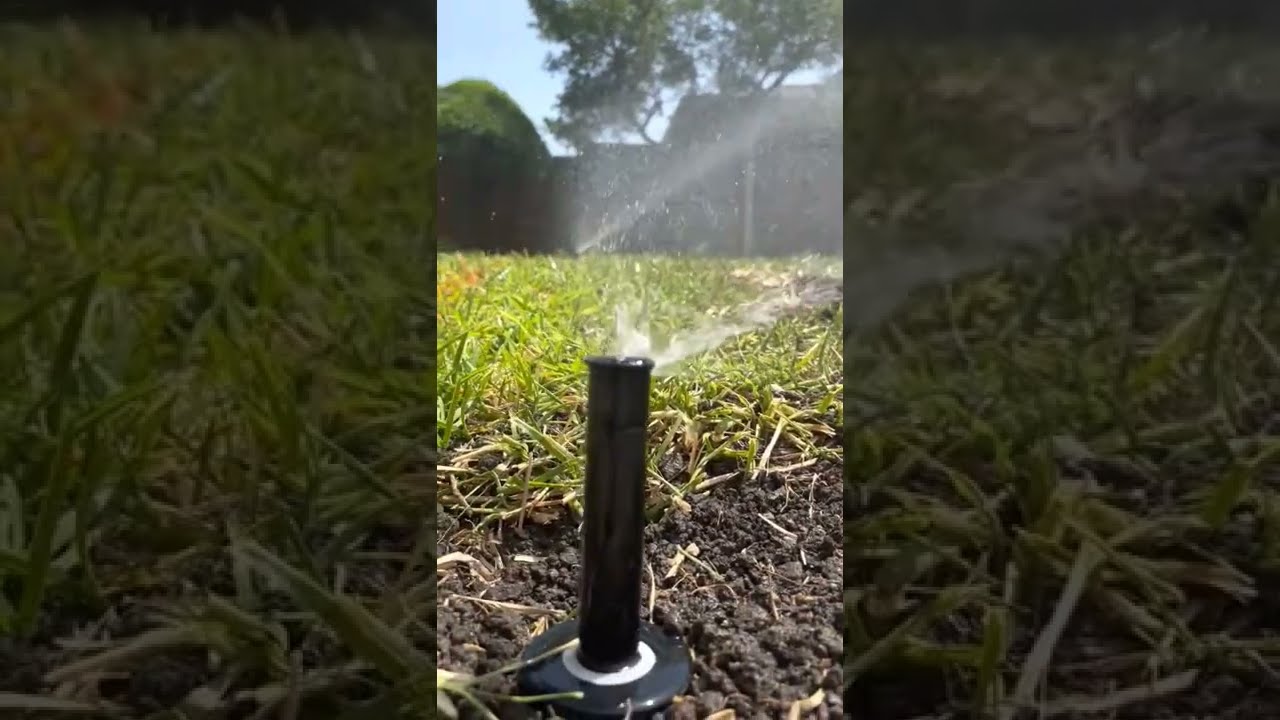
Expect different actions from various heads. Spray heads remove promptly, sometimes in under a minute. Blades require more time because they hold a lot more water in the body and lines. Leave each rotor zone airing vent mist until you see just air puffs at each head. Do not let heads shout. A high-pitched gripe or spin-crazy blades indicate pressure is as well high.
Step-by-step blowout sequence
- Shut off the irrigation water at the isolation shutoff, after that open up an examination penis or a drainpipe on the downstream side of the heartburn preventer to eliminate pressure. Connect the compressor to the blowout port downstream of the heartburn, established the regulatory authority to 45 to 55 psi for sprays and blades, and 25 to 30 psi for drip. From the controller, run the first area by hand, beginning with the greatest elevation; gradually open the compressor shutoff to feed air until heads pop and water turns to a light haze, then to recurring puffs. Cycle through each area two or 3 times in brief runs, 30 to 90 secs per spray area and 1 to 2 mins per rotor area, enabling a quick rest in between passes so the compressor does not overheat. Finish by removing the heartburn preventer body and the manifold if they rest over grade, opening examination penis, turning manages to 45 levels, and leaving drains open for the winter.
That fifth action is entitled to extra attention. Leaving sphere shutoffs partially open soothes any kind of trapped water between seats and reduces the possibility of a split body. If your heartburn preventer is a pressure vacuum cleaner breaker mounted outdoors, remove the bonnet cap if the manufacturer recommends it, or at minimum drainpipe it extensively with the test cocks and protect it with a breathable cover. For an RPZ, drain the relief valve body totally and leave the examination cocks open. In severe climates, many pros eliminate and keep the PVB or RPZ inside after labeling the unions so reassembly is painless in spring.
Backflow preventers, the fragile heart above ground
I have seen much more broken PVBs than any type of other single element after a very early freeze. The brass looks hard, yet the interior plastic poppet and spring setting up will not make it through ice. If you not do anything else prior to the initial cold wave, safeguard the backflow. Shut off the supply, open up the two examination dicks, pop open up a downstream tube bib if one exists, and transform the two round shutoffs to a 45 degree placement. That alone can conserve you from an emergency call for lawn sprinkler repair work in January.
Insulation assists but has limits. A foam cover slows down heat loss overnight but can not quit a 2 days cold spell from cold a complete body of water. Think about insulation as a barrier, not a replacement for draining pipes. If the heartburn is strapped to house siding, examine the standoffs and ensure the device is perfectly upright. A PVB requires upright alignment to seal appropriately in springtime, and a crooked installation has a tendency to collect water on one side when you drain pipes it.
What to do with drip zones
Drip tubes acts in different ways since it holds small pockets of water at each emitter and in the side runs. Blowouts at 25 to 30 psi work, however you have to run the zone much longer than sprays. The sound at the end is a soft hiss instead of bursts of air. If the system consists of a filter canister and pressure regulatory authority at the zone shutoff, open the filter real estate and drainpipe it. Unscrew end caps at the end of drip lines if easily accessible and allow gravity complete the task. Some installers include auto-drains to leak manifolds to simplify this. If you acquire a system without simple drains, add a tee with a threaded cap throughout the next round of sprinkler upkeep. It is a small upgrade that saves time every winter.
Fall upkeep that pays dividends in spring
Winterization is the perfect moment to catch problems while they are easy to take care of. With areas running throughout the blowout, view each head as it gets rid of. Late in the period I typically locate heads resting also reduced after a year of thatch development. A head that sinks also half an inch scalps lawn when the lawn mower passes and drainage in springtime by pattern against the soil. Raise it with a brief swing joint or a threaded riser expansion and reset the grade flush with the lawn.
Nozzles and displays tend to block when particles from a cut line or an unclean water source travels through the system. During the air cleanup, remove a few nozzles and check the screen mugs for sand or flakes. Clean or change as needed. If you find a rotor that declines to turn also after the mist clears, strategy to restore or change it. Bearings dry and gears strip. Neither gets better resting all winter.
Valve boxes tell stories. A box that continues to be muddy long after irrigation stops usually hides a leaking valve diaphragm or a split manifold fitting. Mark it and schedule lawn sprinkler repair service prior to the ground freezes hard. Tightening up a union now is much easier than carving frost in December.
Controllers and sensing units are entitled to a fast pass. Keep in mind the present program, after that established the controller to off or rainfall setting so it does not attempt to run a completely dry system. Replace the coin cell or 9 volt battery in the controller if it has one, and make sure the date and time are right. If a rain sensor exists, test it with a splash from a water bottle so you understand it reacts. Circulation sensing units on bigger systems maintain logs that help diagnose leakages in spring. Make certain they are mapped to areas properly prior to you shut down.
A fast pre-winter checklist
- Verify the shutoff valve operates efficiently and closes completely, then identify it so no one resumes it mid-winter. Locate and test the blowout port downstream of the backflow, and verify your installations match. Gather air devices, a regulatory authority, and a hose pipe ranked for the set stress, plus eye defense and gloves. Walk the yard for noticeable nadirs, superficial lines, or exposed risers that may need added insulation or attention. Check for current lawn sprinkler setup adjustments, such as a new drip area or a relocated head, and update your map so no area is missed.
Five mins keeping that checklist conserves an hour of backtracking later.
When a specialist is worth the call
Many property owners handle winterization with confidence after a season or two, however there are times when working with a pro makes sense. Equipments with complex hydraulics, multi-branch manifolds, or common water materials in HOA setups can be unrelenting. Commercial-grade compressors relocate high volumes, and a professional that invests all fall on blowouts has a feeling for when a rotor is clear and when a line is still sludging with water. If you lack a practical blowout port or your heartburn preventer beings in a confined spot, an accredited tech can adapt installations without taking the chance of cross-connection issues.
The same staff can flag problems that belong on a lawn sprinkler repair listing for wintertime or early springtime. A cracked union on a manifold, a leaking solenoid that declines to close, or a shutoff box crushed by a vehicle will certainly not fix itself. Lots of firms offer packed services, combining winterization with a spring start-up that consists of stress testing and head realignment. If you prepare an adjustment in insurance coverage next year, such as adding a zone for a brand-new garden bed, ask for a fast quote while the tech gets on site. Smart sequencing stays clear of digging two times and might conserve you design fees when you arrange the lawn sprinkler installation as an off-season project.
Good installment makes wintertime easy
The individuals that consider winter months during installation are the factor some systems practically winterize themselves. A few style behaviors make life less complicated every year.
Install seclusion shutoffs where they help. A ball shutoff upstream of the heartburn is basic, but including a second on the downstream side, with a tee and a capped blowout installation, creates a secure, direct port for pressed air and a simple method to purge the heartburn. Usage unions on each side of the backflow so you can remove and save it inside if you live where deep ices up are routine.
Slope lines delicately toward well-known drains pipes when terrain allows. Perfect grade is not always feasible, but staying clear of flat dead legs and finding manifolds at the low end of a run decreases trapped water. On drip manifolds, consist of a purge cap at the far end. It is a ten buck component that fixes a twenty min job every fall.
Use robust products where freezes hit first. Threaded nipples on revealed risers break conveniently when water traps under a cap. Updating to set up 80 nipple areas or using swing joints offers you a little margin. For shutoff manifolds, thick-wall PVC with true union sphere shutoffs takes on the periodic blunder, like a rushed blowout at too high a pressure.
Provide maps and labels. The very best installers identify areas by place and type, and leave a laminated map in the controller box. That saves presuming when you winterize. If you did not obtain a map at install, illustration your very own during the following watering cycle, and mark blowout ports, manual drains, and any peculiarities. Your future self will be grateful.
Special instances and side conditions
Not every residential or commercial property complies with the very same regulations. Shallow-buried systems in older areas, typically installed simply a couple of inches under turf, freeze earlier and thaw much faster. They need cautious blowouts at low stress to avoid standing out go out of their couplers. In mountain towns where the first difficult freeze can come before the leaves decline, I arrange two gos to, an early heartburn drainpipe and seclusion, then a full blowout after the late-season mow.
If your water is from a municipal recovered resource, regard local ordinances when draining pipes. Do not open drains pipes that dump onto walkways where water will certainly refreeze and develop a risk. Numerous cities need purple-coded elements and have specific policies around backflow assemblies on recovered lines. A qualified irrigator will certainly know the regional code. Shutting down shared systems, such as on a little multifamily or retail pad, also demands interaction. Tag shutoffs plainly and alert lessees so no one attempts to hand-water through a quick coupler on a depressurized main.
Systems with check shutoffs in heads preserve water by design so reduced heads do not drain pipes and leave mud around the sprinkler. Throughout blowout, that trapped water will exit with a brief delay. Give those areas an extra pass and tap a number of heads with your boot to damage surface stress so the flapper opens.
How long it takes and what it costs to obtain it wrong
A common residential blowout with six to eight zones takes me 45 to 90 mins, consisting of the fast upkeep checks that need to choose it. Add time for drip, for a stubborn PVB that needs skill to drain, or for locating that last area in an unmarked controller. Employing a professional commonly runs in the low hundreds, differing by region and area matter. That may seem steep alongside a diy mid-day with a little compressor, yet contrast it with replacing a split backflow setting up, which can surpass $400 in parts for a PVB and even more for an RPZ, plus labor. A broken manifold under pavers can develop into a thousand dollar repair when you consider demolition and restoration.
Spring starts less complicated when autumn was done right
A clean winterization establishes a calm springtime. When the time comes, open the seclusion valve gradually while someone watches the backflow preventer. Shut the examination cocks, set the sphere shutoffs vertical, and pay attention for the relief valve to stay peaceful. Pressurize each area at the controller. If you made note in fall, you currently understand which heads required lift or which valve box was worthy of a better look. Run each area long enough to remove any little silt pockets that settled over the winter season, and straighten nozzles that wandered. If flow sensing units exist, compare prices to in 2015's numbers. A dive indicate a break or a missing out on nozzle. You are back to watering instead of excavation.
The concealed advantage of winterizing well
Winterization is about more than maintaining ice out. It produces a reliable rhythm of assessment and care. You see the entire system yearly, under different anxieties, and that educates you where it is solid and where it is delicate. You catch style problems that can be remedied with moderate tweaks, you plan repair services when they are cheapest, and you build a precise image of your landscape's pipes. Whether you handle a few zones in a little lawn or a loads across a large residential or commercial property, that expertise turns lawn sprinkler upkeep from a reactive task into a simple seasonal ritual.
If this year's walkthrough exposed more systemic problems, like chronically underperforming zones or protection spaces that brought about scorched spots in July, begin a discussion now about redesign or targeted sprinkler installment upgrades. Wintertime is when irrigation firms plan staffs and order parts. You will obtain a much better rate and a better schedule slot if you are ahead of the very first warm weekend rush. On the other hand, your system rests, tidy and completely dry, undisturbed by frost.